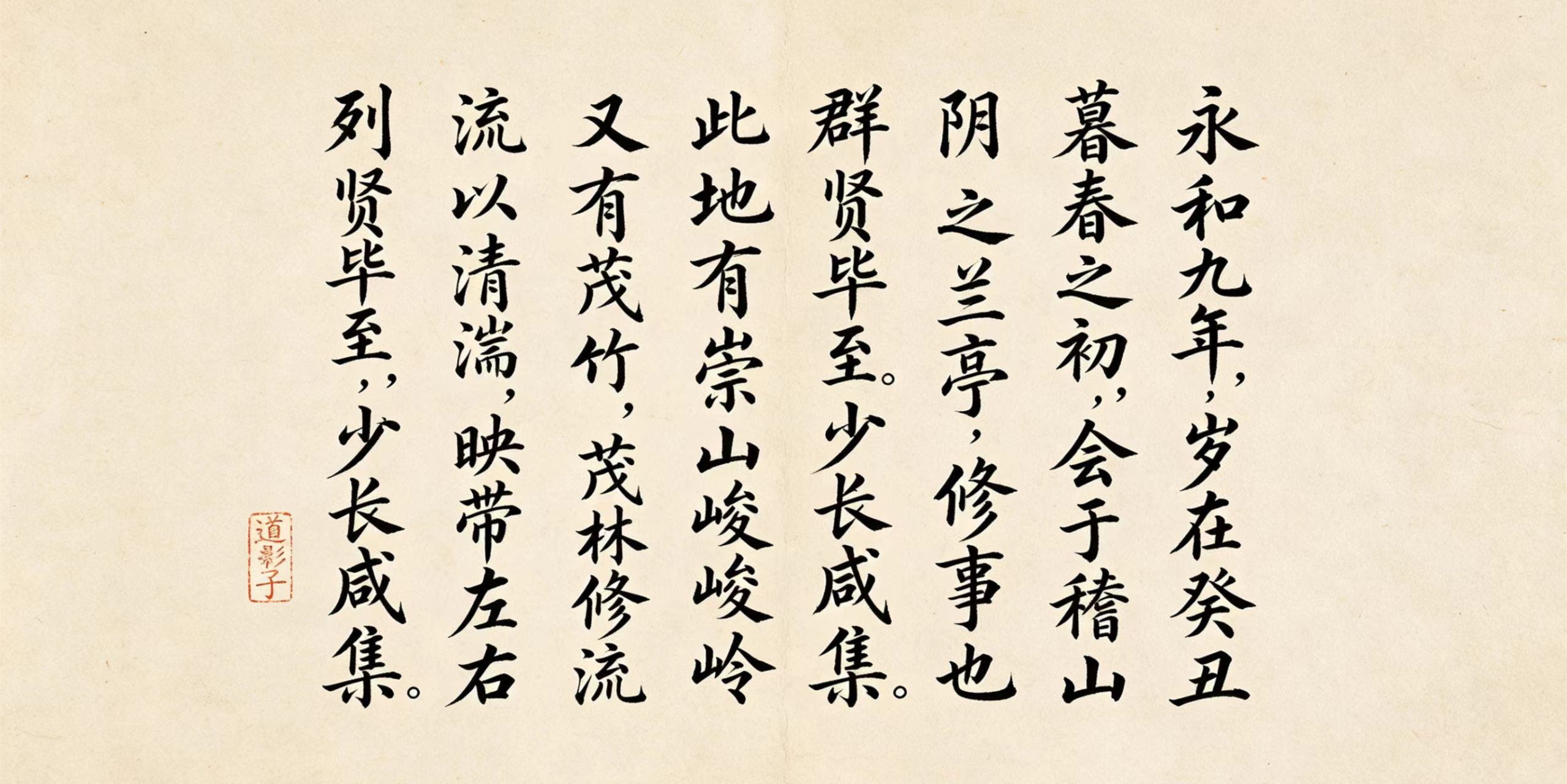
双语道德经中正解读
现代版《道德经》
真正的大道,如果能说得明明白白,那就不是永恒不变的大道;万物真正的样子,如果能随便下个定义,那就不是永恒真实的本性。
没有名字、没有形状的混沌状态,是天地最开始的源头;有了形态、有了名称之后,才开始生出万事万物。
所以常常保持内心清净、没有杂念,才能体会到天地之间最细微、最奇妙的地方;常常带着清醒的觉察去看待世界,才能看清万事万物的边界和来龙去脉。
这两种状态,一个向内观照、一个向外审视,来源其实是同一个,只是名字不一样,都可以说是幽深玄妙。玄之又玄,一层比一层更深,这就是所有奥妙、所有智慧、所有修行的总入口。
世人都执着什么是美,丑的概念就跟着出现;都执着什么是善,不善的对立也就产生了。有和无互相成就,难和易互相形成,长和短互相衬托,高和下互相依存,音和声互相呼应,前和后互相跟随,这是永远不变的规律。
所以悟道的人,用顺其自然的方式做事,用行动而不是用嘴巴去教化别人。任凭万物自然生长而不去干涉,培育了万物却不占为己有,有所作为却不依仗功劳,事情做成了也不居功。正因为不居功,他的成就反而永远不会失去。
不刻意推崇贤能的人,老百姓就不会争名夺利;不把稀有的东西看得太贵重,老百姓就不会去偷盗;不轻易展现让人动心的欲望,人心就不会混乱。
所以悟道的人治理天下,是让大家内心清净、肚子吃饱,减弱贪心和执念,强健身体和骨气,让人们少些心机、少些欲望,让那些耍聪明的人不敢随便乱来。做到这样,天下自然安定。
大道看起来是空的,但用起来永远用不完。它那么深邃,像是万物的源头。它磨掉尖锐的棱角,解开世间的纷乱,调和耀眼的光芒,混同尘世的喧嚣,清澈又深沉,好像存在又好像看不见。我不知道它是从哪里来的,只知道它在天地出现之前,就已经存在了。
天地没有偏爱,对万事万物都一视同仁;悟道的人也没有偏爱,对百姓一视同仁。天地之间,不就像个大风箱吗?看着是空的,却永远用不完,越动产生的力量越多。知道得越多、想得越复杂,反而越容易陷入困境,不如守住内心的平和与中道。
虚空之中那生生不息的力量,就是孕育万物的根源。它连绵不断,好像一直存在,怎么用都不会枯竭。
天长久,地长久。天地之所以能长久,是因为它们不为自己而活,所以才能长生。所以悟道的人,遇事反而退后,却常常被人推到前面;把自己看得很淡,反而能更好地保全自己。正因为无私,最后反而成就了真正的自己。
最高境界的善,就像水一样。水滋养万物,却不和任何东西争抢,停留在大家都不愿意待的低处,所以最接近大道。
居处选择安稳低调的地方,内心像深渊一样沉静,待人真诚善良,说话守信用,做事有条理,发挥自己的能力,行动把握好时机。正因为不争,所以不会有过失和麻烦。
手里抓得太满,不如适可而止;锋芒太露,很难长久保持。金银财宝堆得再多,也守不住;富贵了就骄傲,只会给自己招来灾祸。事情做成了,懂得全身而退,这才符合自然的规律。
身形和精神合二为一,能不分离吗?凝聚气息,变得柔和,能像刚出生的婴儿一样纯粹吗?清扫内心的杂念,保持清醒的观照,能没有一点瑕疵吗?爱护百姓、治理国家,能不用心机和小聪明吗?身心的动静开合,能守住安静柔和的一面吗?明白四方事理,能不炫耀自己的知识吗?
生育万物、滋养万物,生养了却不占有,作为了却不依仗,成长了却不主宰,这就是最深、最真的德行。
三十根辐条集中在一个轮毂上,正因为中间是空的,车子才能用;揉合泥土做器具,正因为里面是空的,才能装东西;开凿门窗盖房子,正因为中间是空的,才能住人。所以,实有的东西带来便利,而虚空的部分,才真正发挥作用。
五颜六色太多,会让人眼睛看花;杂乱的声音太吵,会让人耳朵失灵;浓厚的味道太重,会让人味觉受伤;沉迷打猎追逐,会让人内心发狂;稀罕的宝物,会让人行为不端。所以悟道的人,只求吃饱肚子、安身立命,不追求那些刺激感官的浮华享受。
得宠和受辱都让人惊慌,就像遇到大麻烦一样。为什么宠辱都让人惊慌?因为得到宠爱就开心,失去就害怕,太在意得失,内心就安定不下来。为什么说大麻烦像自身一样?因为人太看重自己。如果能放下对自我的执着,还有什么可害怕的?
只有把天下看得和自己一样重要的人,才配把天下托付给他;只有像爱惜自己一样爱惜天下的人,才配掌管天下。
看也看不见,叫 “夷”;听也听不到,叫 “希”;摸也摸不着,叫 “微”。这三样合在一起,没法彻底追究。它的上面不显得明亮,下面也不显得昏暗,连绵不断,没法用语言形容,最终回到空无的状态。这是没有形状的形状,没有形象的物象,迷迷糊糊、若有若无。迎着它看不见开头,跟着它看不见结尾。把握从古至今不变的大道,用来驾驭当下的万事万物。能明白大道的源头,就掌握了修行的关键。
古时候真正懂道的人,深沉、高远,很难让人看懂。他做事小心翼翼,像冬天踩着冰过河;警觉戒备,像害怕四周有人打扰;恭敬庄重,像去别人家做客;柔和舒展,像冰雪快要融化;敦厚朴实,像没有雕琢的木头;开阔包容,像幽深的山谷;浑厚淳朴,像浑浊的水流。
谁能让浑浊的水安静下来,慢慢变清?谁能在安静中慢慢行动,生出新的生机?守住这个道理的人,不会追求满盈。正因为不追求满盈,才能不断更新,永远不会穷尽。
让内心虚空、安静到极点,看着万物纷纷生长,再看着它们回到自己的根源。万物无论怎么生长,最后都会回归根本。回归根本就是安静,安静就是回归生命的本来。
明白这个永恒规律的人,是清醒的;不明白这个规律,胡乱作为,就会招来凶险。明白永恒规律的人,心胸包容;能包容,就会公正;能公正,就会周全;能周全,就符合天地;符合天地,就符合大道;符合大道,就能长久,一辈子不会遇到危险。
最高明的领导者,百姓只知道他存在;次一等的,百姓亲近他、赞美他;再次一等的,百姓害怕他;最差的,百姓看不起他、轻视他。领导者自己诚信不够,百姓自然不会相信他。真正的领导者,悠闲自在,很少发号施令,事情做成了,百姓都说:我们本来就是这样自然做成的。
大道被抛弃了,才会强调仁义;有了智慧和心机,才会出现严重的虚伪;家庭不和睦,才会凸显孝慈;国家混乱,才会显出忠臣。
抛弃那些所谓的圣明和智巧,百姓能得到百倍的好处;抛弃刻意标榜的仁义,百姓才能回到真正的孝慈;抛弃机巧和利益,盗贼自然就没有了。这三样,光拿来当表面道理是不够的,要让百姓有真正的归属:保持简单、朴实,减少私心、减少欲望。
抛弃那些繁杂的学问,反而没有烦恼。答应和恭敬,差别有多大?美和丑,区别有多少?别人害怕的,你也不能不有所敬畏。
众人都热热闹闹,像去参加盛大宴席,像春天登上高台观景。只有我,淡泊安静,像还不会笑的婴儿,疲惫茫然,没有地方依靠。
大家都好像有多余的东西,只有我好像缺了点什么。我有一颗愚人的心,混混沌沌。世俗的人都清清楚楚,只有我迷迷糊糊;世俗的人都精明能干,只有我沉闷迟钝。
众人都很有作为,只有我显得顽固、粗鄙。我和别人都不一样,因为我重视从大道中汲取养分。
最高的德行,完全是顺着大道来的。大道这个东西,模糊不清、若有若无。在模糊之中,有形象;在恍惚之中,有实物;深远幽暗之中,有最精微的真气;这真气非常真实,里面有确切的信验。
从古到今,大道的作用从来没有消失,让我们能看清万物的开始。我凭什么知道万物开始的样子?就是从大道而来。
能委屈,才能保全;能弯曲,才能伸直;低洼的地方,才能充满;陈旧的东西,才能更新;少取,反而能得到;贪多,反而会迷惑。
所以悟道的人,守住这个统一的大道,作为天下的榜样。不自我表现,所以清楚明白;不自以为是,所以是非彰显;不自我夸耀,所以才有功劳;不骄傲自满,所以才能长久。正因为不和人争,所以天下没有人能和他争。古人说的 “委屈才能保全”,不是一句空话,而是能实实在在做到,最终归于圆满。
少说话,才符合自然。狂风刮不了一整个早上,暴雨下不了一整天。天地的狂暴尚且不能长久,更何况人的所作所为呢?
顺着道走的人,就和道在一起;顺着德行走的人,就和德行在一起;失去道、失去德行的人,就和失丧在一起。和道在一起的人,道也愿意接纳他;和德在一起的人,德也愿意接纳他;失丧的人,自然也会承受失丧的结果。自己诚信不够,别人自然不会相信你。
踮起脚尖想站得更高,反而站不稳;迈大步想走得更快,反而走不远;自我表现的人,不会真正明白;自以为是的人,是非分不清;自我夸耀的人,没有真正的功劳;骄傲自满的人,不可能长久。
从大道的角度看,这些行为都是多余、让人讨厌的,所以真正有道的人,不会这样做。
有一个东西混然一体,在天地出现之前就已经存在。它寂静、空旷,独立存在,永远不变,循环运行,永不停止,可以作为天下的母亲。我不知道它的名字,勉强叫它 “道”,再勉强形容它,就是 “大”。
大,就是不断远去;远去,就是辽阔无边;辽阔无边,最终又回到本源。道大,天大,地大,君王也大。天下有四大,君王是其中之一。人效法地,地效法天,天效法道,道效法自然。
稳重是轻浮的根本,安静是急躁的主宰。有道的人整天行走,都不离开载运衣食行李的车辆,虽然有奢华的生活,却依然超然处之。
为什么大国的君主,还要轻视自己、轻举妄动,来治理天下呢?轻浮就会失去根本,急躁就会失去主宰的地位。
善于行走的人,不留痕迹;善于说话的人,没有瑕疵;善于计算的人,不用筹码;善于关闭的人,不用锁栓,别人也打不开;善于捆绑的人,不用绳子,别人也解不开。
悟道的人,总是善于挽救人,所以没有被抛弃的人;总是善于挽救万物,所以没有被废弃的物品。这就是内在的、真正的明智。
所以,善人可以做恶人的老师;恶人也可以做善人的借鉴。不尊重自己的老师,不爱惜借鉴的对象,就算看起来聪明,其实也是糊涂。这是非常重要的道理。
知道什么是刚强,却安守柔弱,甘愿做天下的溪涧,包容一切。甘愿做天下的溪涧,永恒的德行就不会离开,最后回到像婴儿一样纯粹的状态。
知道什么是明亮,却安守暗昧,甘愿做天下的榜样。甘愿做天下的榜样,德行就不会出差错,最后回到无穷无尽的大道。
知道什么是荣耀,却安守卑辱,甘愿做天下的山谷,容纳一切。甘愿做天下的山谷,德行才能充足,最后回到朴实的本源。
朴实的大道分散开,变成各种器物;悟道的人运用它,成为百官的首领。真正完善的制度,是完整、不割裂的。
想要强行治理天下、胡作非为,我看他是达不到目的的。天下是一个神圣的东西,不能强行干预,不能强行把持。强行去做,一定会失败;强行把持,一定会失去。
所以万物有的走在前面,有的跟在后面;有的轻柔温暖,有的急促寒凉;有的强大,有的羸弱;有的安稳,有的危殆。悟道的人,去除极端、去除奢侈、去除过度。
用大道辅佐君主的人,不会依靠武力逞强天下,因为用武力一定会遭到报应。军队驻扎过的地方,田地荒芜、长满荆棘;大战之后,一定会出现灾荒年。
善于用兵的人,达到目的就停手,不敢用来逞强。达到目的不骄傲,不夸耀,不骄傲,不认为是不得已,更不逞强。
事物过于强壮强盛,就会走向衰老,这不符合大道,不符合大道的东西,很快就会消亡。
兵器是不吉祥的东西,大家都厌恶它,所以有道的人不会轻易使用。君子平时居住以左边为贵,用兵的时候以右边为贵。兵器是不吉祥的东西,不是君子该用的,只有万不得已才用,以淡然平静为上。
就算打了胜仗,也不要觉得美好;觉得美好,就是喜欢杀人。喜欢杀人的人,不可能得到天下人的支持。
吉祥的事情以左边为上,凶丧的事情以右边为上。偏将军站在左边,上将军站在右边,这是说,打仗要用丧礼的心态来对待。杀的人太多,要带着悲伤的心情去对待;打了胜仗,也要用丧礼的仪式来处理。
大道永远没有名字,朴实、看似微小,天下没有人敢支配它、臣服它。侯王如果能守住它,万物自然会归顺。
天地之间阴阳相合,降下甘露,没有人命令,却自然均匀。万物开始有了制度、有了名称,名称既然有了,就要知道适可而止,知道适可而止,就不会有危险。
大道存在于天下,就像江河溪流最终归于江海一样。
能了解别人,是聪明;能了解自己,才是真正的清醒。能战胜别人,是有力量;能战胜自己,才是真正的强大。知道满足,就是富有;坚持力行,就是有志气。不迷失根本的人,才能长久;身死而精神不亡的人,才是真正的长寿。
大道广阔无边,无处不在,左右流淌。万物依靠它生存,它从不推辞;成就了一切,它不占有功劳。滋养万物,却不做主宰,一直没有私欲,可以说是很微小;万物都归顺它,它却不做主宰,可以说是非常伟大。正因为它始终不认为自己伟大,所以才成就了真正的伟大。
把握大道的形象,天下人都会前来归往;前来归往而不互相伤害,大家都平安、安定、平和。
音乐和美食,能让过路的人停下脚步;大道说出口,平淡得没有味道,看也看不见,听也听不到,用起来却永远用不完。
想要收缩它,必先暂时扩张它;想要削弱它,必先暂时强化它;想要废弃它,必先暂时兴盛它;想要夺取它,必先暂时给予它。这是细微而深刻的道理。
柔弱胜过刚强。鱼不能离开深水,国家的严刑峻法、权谋利器,不能随便展示给别人。
大道永远顺其自然,不刻意作为,却没有什么事情做不成。侯王如果能守住这个道理,万物自然会自我化育。自我化育中产生了贪欲,我就用无名的朴实之道来安定它。用无名的朴实之道,贪欲就会平息。没有贪欲,内心安静,天下自然稳定。
最高境界的德,不刻意表现德,这才是真正的有德;下等的德,死守着德的形式,反而没有真正的德。上德的人,顺其自然,不刻意作为,也没有私心目的;下德的人,刻意作为,有私心目的。
上仁的人,有所作为,却没有私心目的;上义的人,有所作为,有私心目的;上礼的人,有所作为,如果没人回应,就会伸出胳膊,强迫别人服从。
所以,失去了道,才讲德;失去了德,才讲仁;失去了仁,才讲义;失去了义,才讲礼。礼这个东西,标志着忠信淡薄,也是祸乱的开始。所谓的超前预见,只是大道的浮华,也是愚昧的开始。
大丈夫立身敦厚,不居于浅薄;存心朴实,不居于浮华。所以舍弃那些虚浮的,选择实在的。
古时候得到 “一”,也就是大道的:天得到一,所以清明;地得到一,所以安宁;神得到一,所以灵验;河谷得到一,所以充盈;万物得到一,所以生长;侯王得到一,所以天下安定。
推而言之:天如果不清明,恐怕会崩裂;地如果不安宁,恐怕会塌陷;神如果不灵验,恐怕会停歇;河谷如果不充盈,恐怕会枯竭;万物如果不能生长,恐怕会灭绝;侯王不能安定,恐怕会垮台。
所以,贵是以贱为根本,高是以低为基础。侯王自称 “孤”“寡”“不谷”,这不就是以卑贱为根本吗?所以,最高的荣誉,就是没有荣誉。所以,不愿意像美玉那样华丽,宁愿像石头一样朴实、坚硬。
道的运行,是循环往复、回到本源;道的作用,是柔和、不争。天下万物从有形的 “有” 中产生,而有形的 “有”,从无形的 “道” 中产生。
上等资质的人,听到道,努力去实行;中等资质的人,听到道,半信半疑、若有若无;下等资质的人,听到道,哈哈大笑。如果不被嘲笑,那就不是真正的大道。
所以古人说:明白的道,好像昏暗;前进的道,好像后退;平坦的道,好像崎岖;最高的德,好像低洼的山谷;最洁白的东西,好像含有污垢;最广博的德,好像不足;最刚健的德,好像懈怠;最朴实纯真的东西,好像浑浊易变。
最方正的东西,反而没有棱角;最贵重的器物,最后完成;最大的声音,反而听不见;最大的形象,反而没有形状。大道隐藏起来,没有名称,只有大道,善于借给万物力量,并且成就一切。
道生出统一的本源,本源分出阴阳二气,阴阳二气相合,生出第三者,进而生出万物。万物背靠阴而怀抱阳,阴阳两气互相激荡,形成和谐的状态。
人们所厌恶的,就是 “孤”“寡”“不谷”,但王公却用这些来称呼自己。所以,一切事物,有时候贬低它,反而让它得到提升;有时候抬高它,反而让它受损。别人用来教导我的,我也用来教导别人:强横凶暴的人,不会得到好死。我把这句话,作为教人的根本。
天下最柔软的东西,能在天下最坚硬的东西里自由穿梭。无形的力量,能穿透没有缝隙的东西,我因此明白,顺其自然、不刻意作为的好处。不用言语的教化,顺其自然的益处,天下很少有人能做到。
名声和生命,哪个更亲近?生命和财富,哪个更贵重?得到和失去,哪个更有害?过于喜爱某物,一定会付出巨大的耗费;过多收藏财富,一定会遭受惨重的损失。知道满足,就不会受辱;知道适可而止,就不会有危险,这样才能长久。
最圆满的东西,好像还有欠缺,但它的作用不会衰败;最充盈的东西,好像还是虚空,但它的作用不会穷尽。最笔直的东西,好像是弯曲的;最灵巧的东西,好像是笨拙的;最善辩的人,好像是口齿迟钝的。
急躁能战胜寒冷,安静能战胜暑热,保持清静平和,才能成为天下的榜样。
天下有道、政治清明的时候,战马都被送回田里,用来耕种施肥;天下无道、战乱不休的时候,怀胎的母马也要上战场,在郊外生小马驹。
最大的祸患,就是不知道满足;最大的过失,就是贪得无厌。所以,知道满足的这种满足,才是永远的满足。
不用走出家门,就能知道天下的事情;不用往窗外看,就能明白自然的规律。走得越远,知道的真正道理反而越少。所以悟道的人,不用亲自经历,就能知道;不用亲自看见,就能明白;不用刻意作为,就能成功。
追求学问,知识一天比一天增加;追求大道,执念一天比一天减少。减少再减少,最后达到完全顺其自然、不刻意作为的境界。顺其自然,就没有什么事情做不成。
治理天下,常常靠不生事、不折腾;如果经常生事、折腾,就不配治理天下。
悟道的人,没有固定不变的私心,把百姓的心当作自己的心。善良的人,我善待他;不善良的人,我也善待他,这样德才能普及、回归善良。守信的人,我信任他;不守信的人,我也信任他,这样德才能普及、回归诚信。
悟道的人在天下,收敛自己的心神,让天下人的心都变得浑厚、朴实。百姓都专注在自己的耳目见闻、私心杂念里,悟道的人把他们都当作孩子一样看待。
人从出生到死亡,长寿的人,占十分之三;短命夭折的,占十分之三;本来可以长寿,却自己走向死地的,也占十分之三。这是为什么?因为太过于刻意养生,反而伤害了生命。
听说善于保养生命的人,在陆地上行走,不会遇到犀牛和老虎;进入军队打仗,不会被兵器伤到。犀牛用不上它的角,老虎用不上它的爪,兵器用不上它的刃。这是为什么?因为他根本不会进入死亡的境地。
道生出万物,德养育万物,万物形成各自的形态,环境和趋势让它们成长。所以万物没有不尊崇道、珍视德的。道被尊崇,德被珍视,不是谁命令的,而是本来就自然如此。
所以道生出万物,德养育万物,生长、培育、成熟、调养、滋养、庇护。生养了却不占有,作为了却不依仗,成长了却不主宰,这就是最深、最真的玄德。
天下万物都有一个开始,这个开始就是天下万物的根源。既然知道了根源,就能了解万物;既然了解了万物,再守住根源,一辈子都不会有危险。
堵塞欲望的孔穴,关闭杂念的门径,一辈子都不会辛劳疲惫。打开欲望的孔穴,助长繁杂的事情,一辈子都无可救药。
能看见细微的东西,叫做明智;能守住柔弱的本性,叫做强大。运用外在的光芒,回归内在的清明,不会给自己带来灾祸,这就是传承永恒的大道。
假如我稍微有一点见识,走在大道上,就只怕走上邪路、胡作非为。大道非常平坦,可是有些人偏偏喜欢走小路。宫殿非常整洁,田地却非常荒芜,仓库非常空虚;穿着华丽的衣服,佩戴锋利的宝剑,吃腻了美食,财物多得用不完,这叫做强盗头子,完全不符合大道。
善于建立的,无法被拔掉;善于抱持的,不会脱落;子孙后代,世世代代都不会断绝祭祀。把这个道理用在自己身上,德行就会真实纯粹;用在家庭,德行就会充裕有余;用在乡里,德行就会长久增长;用在邦国,德行就会丰盛饱满;用在天下,德行就会普遍广大。
所以,用自己观察别人,用家庭观察别人的家庭,用乡里观察别人的乡里,用邦国观察别人的邦国,用天下观察别人的天下。我凭什么知道天下是这样的?就是用的这个方法。
德行深厚的人,就像刚出生的婴儿。毒虫不会蛰他,猛兽不会伤害他,猛禽不会抓取他。他骨头柔弱、筋脉柔软,小拳头却握得很紧;还不懂男女之事,小生殖器却常常勃起,这是精气充足到了极点。整天哭叫,嗓子却不会沙哑,这是和气充足到了极点。
明白和谐的道理,就是懂得永恒;懂得永恒,就是明智。刻意增益生命,就是不祥;用心神强行支配气息,就是逞强。事物过于强壮,就会走向衰老,这不符合大道,不符合大道,很快就会消亡。
真正明白大道的人,不多说话;爱多说的人,其实不明白大道。堵塞欲望的孔穴,关闭杂念的门径,磨掉棱角,解开纷乱,调和光芒,混同尘世,这就是最高境界的 “玄同”。
所以,没办法和他过分亲近,也没办法过分疏远;没办法给他利益,也没办法伤害他;没办法让他尊贵,也没办法让他卑贱。所以,他被天下人所尊重。
用正大光明的方法治理国家,用出奇制胜的方法用兵,用不生事、不折腾的方法取得天下。我凭什么知道是这样的?就是因为:天下的禁忌越多,百姓就越贫穷;人们掌握的权谋利器越多,国家就越混乱;人们的技巧心机越多,奇怪的事情就越频繁发生;法令越是森严,盗贼反而越多。
所以悟道的人说:我顺其自然,百姓自然自我化育;我喜欢安静,百姓自然行为端正;我不生事折腾,百姓自然富足;我没有贪欲,百姓自然回归朴实。
政治宽厚、不苛刻,百姓就淳朴、厚道;政治严苛、明察秋毫,百姓就狡诈、不满。灾祸啊,幸福就倚靠在旁边;幸福啊,灾祸就隐藏在其中。谁知道最终的结果?本来就没有固定不变的标准。正的会变成奇的,善的会变成妖的,人们的迷惑,已经很久了。
所以悟道的人,方正却不割伤人,有棱角却不刺伤人,正直却不放肆,明亮却不炫耀。
治理百姓、侍奉上天,没有比节俭、爱惜更重要的。只有节俭、爱惜,才能早早顺应大道;早早顺应大道,就是不断积累德行;不断积累德行,就没有什么不能攻克;没有什么不能攻克,就没有人能知道他的极限;没有人知道他的极限,就可以拥有国家;掌握了治国的根本,就可以长久存在。这就是根深蒂固、长生久视的道理。
治理大国,就像煎小鱼,不能反复翻动、折腾。用大道治理天下,鬼怪就不会显灵作怪;不是鬼怪不显灵,而是就算显灵,也不会伤害人;不但鬼怪不伤害人,悟道的人也不伤害人。两者都不互相伤害,所以德行就归于双方,归于百姓。
大国要像江河的下游,处于天下柔弱、谦卑的位置,是天下交汇的地方。雌性常常凭借安静战胜雄性,就是因为安静、谦卑。
所以大国对小国谦卑,就能取得小国的归顺;小国对大国谦卑,就能取得大国的包容。所以,有的谦卑来取得归顺,有的谦卑来取得包容。大国不过是想包容、养育更多人,小国不过是想侍奉、依附大国。两者都能得到自己想要的,那么大国更应该保持谦卑。
道,是万物深藏的归宿,是善人的宝贝,也是不善人的依靠。美好的言语,可以换来尊重;美好的行为,可以给人带来价值。就算是不善的人,怎么可以抛弃他们呢?
所以拥立天子,设置三公,虽然有捧着玉璧、驷马驾车的隆重礼仪,不如用这个大道来进献。古时候为什么如此重视大道?不就是说,有求就能得到,有罪过可以免除吗?所以,道被天下人所珍视。
以顺其自然的态度去作为,以不生事的态度去做事,以平淡无味的态度去体味。把小的看成大的,把多的看成少的,用恩德来回报怨恨。
解决困难的事情,要从容易的地方入手;做伟大的事情,要从细微的地方入手。天下的难事,一定从容易的地方做起;天下的大事,一定从细微的地方做起。所以悟道的人,始终不贪图做大事,反而能成就伟大的事情。
轻易许诺的人,一定很少守信用;把事情看得太容易,一定会遇到更多困难。所以悟道的人,重视困难,反而最终没有困难。
局面安稳的时候,容易保持;还没有出现征兆的时候,容易图谋;事物脆弱的时候,容易分解;事物细微的时候,容易消散。要在事情发生之前就处理,要在混乱出现之前就治理。
合抱的大树,从细小的嫩芽长起;九层的高台,从一筐筐泥土筑起;千里的远行,从脚下第一步开始。刻意作为的人,会失败;强行把持的人,会失去。所以悟道的人,不刻意作为,所以不会失败;不强行把持,所以不会失去。
普通人做事情,常常在快要成功的时候失败。如果在结束的时候,也像开始的时候一样谨慎,就不会失败。所以悟道的人,追求别人所不追求的,不看重稀有的财物;学习别人所不学习的,补救众人所犯的过错;辅助万物自然发展,而不敢刻意干预。
古时候真正懂道的人,不是让百姓变得聪明、狡诈,而是让百姓变得淳朴、厚道。百姓难以治理,就是因为他们心机太多、智慧太杂。
所以用智慧、心机治理国家,是国家的灾祸;不用智慧、心机治理国家,是国家的福气。明白这两点,就是一个固定的法则。常常明白这个法则,就是最深的玄德。玄德非常深、非常远,和万物一起回归本源,然后达到完全的平顺自然。
江海之所以能成为百川的领袖,是因为它善于处在低下的位置,所以能成为百川之王。
所以悟道的人,想要处在百姓之上,言语上一定要谦卑;想要处在百姓之前,一定要把自己放在后面。
所以他处在上面,百姓不觉得沉重;处在前面,百姓不觉得妨碍。所以天下人都乐于推举他,而不感到厌烦。因为他不和人争,所以天下没有人能和他争。
天下人都说我的道太大,好像不像任何具体的东西。正因为它太大,所以才不像具体的东西。如果像具体的东西,早就变得渺小、微不足道了。
我有三件宝贝,持有并珍惜:第一是慈爱,第二是节俭,第三是不敢做天下第一。
因为慈爱,所以有勇气;因为节俭,所以能广大;因为不敢做天下第一,所以能成为万物的首长。
现在舍弃慈爱,只追求勇气;舍弃节俭,只追求广大;舍弃退后,只追求争先,只有死路一条。
慈爱,用来征战就能胜利,用来守卫就能坚固。上天要救助谁,就用慈爱来保卫谁。
真正的将帅,不逞勇武;真正善于作战的人,不轻易发怒;真正善于战胜敌人的人,不和敌人正面交锋;真正善于用人的人,对人谦卑。这就是不与人争的德行,这就是善于运用别人的力量,这就是符合上天、自古以来最高的境界。
用兵的人说过:我不敢主动进攻,而是被动防守;不敢前进一寸,反而后退一尺。
这就是,没有阵势可以列,没有臂膀可以举,没有敌人可以面对,没有兵器可以执。
最大的灾祸,就是轻视敌人,轻视敌人,几乎让我失去宝贝。
所以两军实力相当的时候,心怀慈悲、哀痛的一方,会获得胜利。
我的话非常容易理解,非常容易实行,可是天下没有人能理解,没有人能实行。
说话有宗旨,做事有根本。正因为人们不明白这个宗旨和根本,所以不理解我。
理解我的人很少,效仿我的人就更珍贵。所以悟道的人,穿着粗布衣服,怀里却藏着宝玉。
知道自己还有不知道的,是上等;不知道却自以为知道,是毛病。只有把毛病当成毛病,才不会有毛病。悟道的人没有毛病,就是因为他把毛病当成毛病,所以没有毛病。
百姓不畏惧威严,那更大的威严就要到来。不要逼迫百姓的居所,不要厌弃百姓的生计。正因为不厌弃,所以百姓才不厌恶统治者。
所以悟道的人,有自知之明,不自我表现;懂得自爱,不自我尊贵。所以舍弃后者,选择前者。
勇于逞强、敢做敢为,就会招致杀身之祸;勇于收敛、不敢妄为,反而能保全生命。这两种勇,一种有利,一种有害。上天所厌恶的,谁知道是什么原因?
上天的道理,不争夺却善于取胜,不说话却善于回应,不召唤却自动到来,坦然宽广却善于谋划。天网广阔无边,虽然稀疏,却不会有任何遗漏。
百姓连死都不怕,为什么还要用死亡来吓唬他们?假如让百姓一直畏惧死亡,对于那些胡作非为的人,我抓来杀掉,谁还敢再做?
永远有专门掌管杀戮的力量在运行,代替这个掌管杀戮的力量去杀人,就像代替高明的木匠去砍木头。代替高明的木匠砍木头,很少有不伤到自己手的。
百姓之所以饥饿,是因为统治者收的税太多,所以百姓饥饿。百姓之所以难以治理,是因为统治者刻意作为、折腾太多,所以百姓难治。百姓之所以轻视死亡、铤而走险,是因为统治者过于追求养生、耗费太多,所以百姓轻死。
只有不刻意追求养生的人,比过于看重养生的人更高明。
人活着的时候,身体是柔软的,死了以后,身体变得僵硬。草木活着的时候,柔软脆弱,死了以后,变得干枯坚硬。
所以坚硬刚强的东西,属于死亡一类;柔软柔弱的东西,属于生命一类。所以军队过于强硬,就会灭亡;树木过于强硬,就会折断。
强大的,反而处在下面;柔弱的,反而处在上面。
上天的道理,不就像拉弓射箭吗?高了就压低一点,低了就抬高一点;多余的就减少,不足的就补充。
上天的道理,减少多余的,补给不足的。人间的道理却不是这样,减少不足的,用来供奉多余的。
谁能把多余的拿出来,奉献给天下?只有得道的人。
所以悟道的人,有所作为却不依仗功劳,成就功业却不居功自傲,他不愿意表现自己的贤能。
天下没有比水更柔弱的东西,可是攻击坚强的东西,没有什么能胜过水,因为没有东西能代替它。
弱能胜强,柔能胜刚,天下没有人不知道,却没有人能做到。
所以悟道的人说:能承受国家的屈辱,才配做国家的君主;能承受国家的灾祸不祥,才配做天下的君王。
正面的话,听起来反而像反话一样。
调解深重的怨恨,必然还会留下余怨,这怎么能算是完善呢?
所以悟道的人,虽然拿着借据的存根,却不向人逼迫讨债。有德的人,就像拿着借据一样宽厚;无德的人,就像掌管税收一样苛刻。
上天的道理,没有偏爱,永远帮助善良的人。
国家要小,百姓要少。即使有各种器具,也不使用;让百姓重视死亡,不向远方迁徙。虽然有船只车辆,却没有必要乘坐;虽然有铠甲兵器,却没有地方陈列。让百姓回归到结绳记事的简单时代。
吃得香甜,穿得美丽,住得安稳,喜欢自己的风俗。邻国互相望得见,鸡鸣狗叫的声音互相听得见,百姓直到老死,也不互相往来。
真实的话,不一定好听;好听的话,不一定真实。善良的人,不善于争辩;善于争辩的人,不一定善良。真正明白大道的人,不追求广博;追求广博的人,不一定明白大道。
悟道的人,不私自积累,尽力帮助别人,自己反而更充足;尽力给予别人,自己反而更丰富。
上天的道理,是利益万物,而不伤害;悟道的人的道理,是有所作为,而不争夺。
Tao Te Ching
The Modern, Authentic English Translation (from the highest dimension)
The true Tao, if it could be put into clear words, would not be the eternal, unchanging Tao.
The true nature of all things, if it could be easily defined, would not be eternal reality.
The nameless, formless chaos is the origin of heaven and earth.
Once forms and names appear, all things begin to emerge.
Therefore, keep your mind quiet and free of distraction,
and you will perceive the subtlest wonders of heaven and earth.
Stay awake and aware,
and you will see the boundaries and paths of all things.
These two states — inner stillness and outer awareness — come from the same source,
only with different names. Both are deep, mysterious, and profound.
Mystery upon mystery, layer upon layer —
this is the gate to all wonder, all wisdom, all spiritual practice.
When the world defines what is beautiful, ugliness arises.
When it defines what is good, evil appears.
Being and non-being create each other.
Difficult and easy support each other.
Long and short define each other.
High and low depend on each other.
Sound and voice harmonize with each other.
Before and after follow each other.
This is the unchanging order.
Therefore, those who realize the Tao act without forcing,
and teach without words.
They let all things grow naturally, without interference.
They nurture all things, but do not claim them as their own.
They act, but do not rely on their achievements.
They accomplish their work, but do not take pride in it.
Because they do not take pride, their achievements remain forever.
If you do not exalt the talented, people will not compete.
If you do not value rare treasures, people will not steal.
If you do not show tempting desires, people’s hearts will not be disturbed.
Therefore, those who guide the world calm people’s minds,
fill their bellies,
weaken their greed,
and strengthen their bones.
They keep people free of scheming and desire,
so that those who would manipulate others dare not act.
In this way, the world naturally settles in peace.
The Tao seems empty, yet it is never exhausted.
It is profound, like the source of all things.
It blunts sharp edges,
untangles knots,
softens glare,
and mingles with dust.
It is clear and deep, hidden yet present.
I do not know where it came from,
only that it existed before heaven and earth.
Heaven and earth are impartial;
they treat all things the same.
Those who realize the Tao are also impartial;
they treat all people the same.
Between heaven and earth, is it not like a bellows?
Empty, yet never depleted;
the more it moves, the more it gives.
The more you know and the more you think,
the more trapped you become.
Better to stay centered in peace.
The endless, living power within emptiness
is the source that births all things.
It continues without cease, always present,
never worn out, no matter how much it is used.
Heaven endures, earth lasts long.
Why?
Because they do not live for themselves.
Therefore they live long.
Thus, those who realize the Tao step back,
yet remain before others.
They set themselves aside,
yet are preserved.
By being selfless, they fulfill their true selves.
The highest goodness is like water.
Water nourishes all things, yet does not compete with anyone.
It stays in lowly places others reject.
Therefore it is closest to the Tao.
Live in a grounded, humble place.
Keep your mind deep and calm.
Treat others with kindness.
Speak with honesty.
Govern with order.
Act with ability.
Move with proper timing.
Because there is no competition, there is no fault.
Grasp too tightly, and it is better to stop.
Sharpen a blade too much, and it will not last.
Gold and jewels fill a house, yet cannot be guarded.
Pride in wealth and status brings disaster.
When the work is done, withdraw —
this is the way of heaven.
Can you unify your body and spirit, and never separate?
Can you gather your energy, become soft, and be like a newborn baby?
Can you clear your mind and see without flaw?
Can you love people and govern without trickery?
Can you remain calm and gentle as life opens and closes?
Can you understand all things, yet not show off your knowledge?
To birth and nurture all things —
to give life without claiming ownership,
to act without relying on merit,
to grow without dominating —
this is the deepest, truest virtue.
Thirty spokes join at one hub;
only the empty center makes the wheel useful.
Clay is shaped into a vessel;
only the empty space inside makes it useful.
Doors and windows are cut out for a room;
only the empty space within makes it useful.
What is tangible offers utility,
but emptiness is what makes it truly work.
Too many colors blind the eye.
Too much noise deafens the ear.
Too much rich food numbs the taste.
Hunting and chasing drive the mind mad.
Rare treasures lead people astray.
Therefore, those who realize the Tao seek only to eat well and live simply,
not sensory excitement and empty luxury.
Favor and disgrace both cause alarm,
like great trouble itself.
Why do both favor and disgrace disturb us?
Because we are attached to the self.
If you let go of attachment to self,
what is there to fear?
Only those who value the world as their own self
are worthy to be entrusted with it.
Only those who love the world as they love themselves
are worthy to lead it.
What you cannot see is called Yi.
What you cannot hear is called Xi.
What you cannot touch is called Wei.
These three cannot be fully grasped.
They merge into one.
Its upper part is not bright.
Its lower part is not dark.
It continues endlessly, nameless,
returning to emptiness.
It is the form of the formless,
the image of nothingness,
dim and vague.
You face it, you cannot see its front.
You follow it, you cannot see its back.
Hold fast to the ancient, unchanging Tao,
and you can master all things today.
To know the origin is to grasp the essence of the Tao.
Those who understood the Tao in ancient times
were deep, far-reaching, and hard to comprehend.
They moved carefully, like crossing ice in winter.
They were cautious, as if fearing neighbors on all sides.
They were respectful, like guests.
They softened, like ice melting.
They were simple, like uncarved wood.
They were open, like a valley.
They were whole, like muddy water settling.
Who can let muddy water calm and grow clear?
Who can rest in stillness until life awakens again?
Those who hold this Tao do not seek fullness.
Because they do not seek fullness,
they are constantly renewed, never exhausted.
Empty your mind, be completely still.
Watch all things grow,
and see them return to their root.
No matter how things flourish, they all return to the source.
Returning to the root is stillness —
returning to one’s true nature.
To know this constant is enlightenment.
Not knowing it leads to reckless action and misfortune.
Knowing the constant leads to acceptance.
Acceptance leads to impartiality.
Impartiality leads to wholeness.
Wholeness aligns with heaven.
Heaven aligns with the Tao.
The Tao endures.
All your life, you will not be in danger.
The best leader is one the people barely know exists.
Next is one they love and praise.
Next is one they fear.
The lowest is one they despise.
When the leader lacks trust,
the people will not trust in return.
The true leader is calm, speaks little.
When the work is done, the people say:
“We did it naturally.”
When the great Tao is abandoned,
people praise benevolence and justice.
When wisdom and cleverness appear,
great hypocrisy arises.
When family relationships are broken,
people honor filial piety and kindness.
When the country falls into chaos,
loyal ministers appear.
Cast aside holiness and cleverness,
and people gain a hundredfold benefit.
Cast aside benevolence and justice,
and people return to true kindness.
Cast aside trickery and profit,
and thieves disappear.
These three are only surface teachings.
Let people hold to what is real:
simplicity, naturalness,
few selfish desires, little craving.
Abandon book learning, and you have no worries.
How much difference is there between yes and respect?
How much difference between beauty and ugliness?
What others fear, you must also respect.
All people are bright and excited,
as if enjoying a great feast,
as if climbing a tower in spring.
I alone am calm and quiet,
like a baby who has not yet smiled,
weary, with no place to belong.
Others seem to have more than enough.
I alone appear to lack everything.
I have the mind of a fool, confused and empty.
Ordinary people are bright and clear;
I alone am dim.
Ordinary people are sharp and clever;
I alone am dull.
Everyone is busy;
I alone am stubborn and simple.
I am different from others —
I value being nourished by the Tao, the mother of all.
The greatest virtue follows only the Tao.
The Tao, as a thing, is dim and vague.
Vague and dim, yet within it is form.
Dim and vague, yet within it is substance.
Deep and hidden, yet within it is pure essence.
This essence is utterly real, and within it is truth.
From ancient times until now, its name has not vanished.
Through it we see the beginning of all things.
How do I know the beginning of all things?
Through this Tao.
To bend is to be preserved.
To curve is to straighten.
To be low is to be filled.
To be worn is to be renewed.
To have little is to gain.
To have much is to be confused.
Therefore, those who realize the Tao hold to unity
as the model for the world.
They do not show themselves — so they shine.
They do not justify themselves — so they stand out.
They do not boast — so they achieve.
They do not pride themselves — so they last.
Because they do not compete,
no one under heaven can compete with them.
The ancient saying, “To bend is to be preserved,”
is not empty words.
It is real, and leads to wholeness.
Speak little — that is natural.
A fierce wind cannot last all morning.
A downpour cannot last all day.
Even heaven and earth cannot make violence endure.
How much less can human beings?
Those who follow the Tao align with the Tao.
Those who follow virtue align with virtue.
Those who lose both align with loss.
The Tao welcomes those who align with it.
Virtue welcomes those who align with it.
Loss welcomes those who align with it.
If you are untrustworthy,
you will not be trusted.
Stand on tiptoes, and you will not stand firm.
Stride fast, and you will not travel far.
Those who show themselves do not shine.
Those who justify themselves are not clear.
Those who boast achieve nothing.
Those who pride themselves do not last.
From the perspective of the Tao,
these actions are excess and waste.
Those who have the Tao do not behave this way.
There is a thing, complete and whole,
born before heaven and earth.
Silent and vast,
it stands alone, never changing,
revolving without stopping.
It can be the mother of all things under heaven.
I do not know its name.
I call it Tao.
If forced to describe it, I call it Great.
To be great is to flow outward.
To flow outward is to go far.
To go far is to return.
Thus:
The Tao is great.
Heaven is great.
Earth is great.
The king is great.
In the world there are four great ones,
and the king is one.
Human beings follow earth.
Earth follows heaven.
Heaven follows the Tao.
The Tao follows what is naturally so.
Heaviness is the root of lightness.
Stillness is the master of restlessness.
Therefore, those who realize the Tao travel all day
without leaving their supply cart.
Though surrounded by luxury,
they remain calm and detached.
Why do lords of great nations
act lightly and recklessly?
To be light is to lose your root.
To be restless is to lose your mastery.
A good traveler leaves no tracks.
A good speaker leaves no flaws.
A good calculator needs no counters.
A good closure needs no bolt, yet cannot be opened.
A good bond needs no rope, yet cannot be untied.
Therefore, those who realize the Tao always save people —
so no one is abandoned.
They always save things —
so nothing is wasted.
This is called hidden wisdom.
Thus, good people are teachers for the unskilled.
Unskilled people are lessons for the good.
If you do not value your teacher,
or do not cherish your lessons,
you may seem wise, but you are deeply confused.
This is the essential secret.
Know the masculine,
yet hold to the feminine —
be a valley for the world.
As a valley for the world,
constant virtue will not leave you,
and you return to the innocence of a baby.
Know the bright,
yet hold to the dark —
be a model for the world.
As a model for the world,
constant virtue will not fail you,
and you return to the infinite.
Know glory,
yet hold to humility —
be a valley for the world.
As a valley for the world,
constant virtue will be complete,
and you return to uncarved wood.
When uncarved wood is divided, it becomes tools.
Wise people, using this, become leaders.
The greatest system is not cut apart.
Whoever tries to take the world and shape it by force
will not succeed.
The world is a sacred vessel.
It cannot be forced.
It cannot be held.
Whoever forces it, ruins it.
Whoever holds it, loses it.
Thus, some things go ahead, some follow.
Some breathe soft, some blow hard.
Some are strong, some weak.
Some are safe, some fall.
Therefore, those who realize the Tao
reject excess, extravagance, and arrogance.
Whoever guides a ruler with the Tao
does not use weapons to conquer the world.
Such actions bring their own reward.
Where armies stay, thorns and brambles grow.
After a great war, years of famine follow.
A good commander achieves his purpose, then stops.
He does not use force to conquer.
Achieve, but do not pride yourself.
Achieve, but do not boast.
Achieve, but do not be arrogant.
Achieve, but see it as unavoidable.
Achieve, but do not overpower.
Things grow strong, then grow old.
This is against the Tao.
What is against the Tao will soon end.
Weapons are inauspicious tools.
They are not tools of the noble person.
Only when unavoidable are they used,
with calm restraint.
Do not rejoice in victory.
To rejoice in victory is to delight in killing people.
Whoever delights in killing people
will not succeed in the world.
Auspicious events favor the left.
Inauspicious events favor the right.
The lieutenant general stands on the left.
The supreme general stands on the right.
This means war is treated like a funeral.
When many people are killed,
we grieve and mourn.
Victory in war is treated like a funeral.
The Tao is always nameless.
Though simple and small,
nothing under heaven can subdue it.
If lords and kings could hold to it,
all things would submit naturally.
Heaven and earth unite, sending sweet dew.
No one commands it, yet it falls evenly.
When order begins, names appear.
Once names exist, you must know when to stop.
Knowing when to stop avoids danger.
The Tao in the world
is like rivers and valleys flowing into the sea.
To know others is intelligence.
To know yourself is true clarity.
To conquer others is power.
To conquer yourself is true strength.
To know you have enough is wealth.
To act with resolve is willpower.
To not lose your root is to endure.
To die but not vanish is true longevity.
The Tao flows everywhere, to left and right.
All things depend on it for life, and it does not refuse.
It accomplishes its work, yet claims no title.
It nourishes all things, yet does not rule them.
Having no desires, it may be called small.
All things return to it, yet it does not rule them.
It may be called great.
Because it never considers itself great,
it achieves true greatness.
Hold the great image of the Tao,
and all under heaven will come.
They come and are not harmed —
safe, peaceful, at ease.
Music and fine food make passers-by stop.
But the Tao, when spoken,
is bland, without taste.
You look, but do not see it.
You listen, but do not hear it.
Yet you use it, and it is never exhausted.
If you want to shrink something,
you must first let it expand.
If you want to weaken something,
you must first let it strengthen.
If you want to destroy something,
you must first let it flourish.
If you want to take something,
you must first give it.
This is subtle wisdom.
Soft and weak overcomes hard and strong.
Fish cannot leave the deep waters.
A nation’s weapons and power
must not be shown to others.
The Tao always acts without action,
yet nothing is left undone.
If lords and kings hold to it,
all things will transform naturally.
If desire arises during transformation,
I calm them with the simplicity of the nameless Tao.
This simplicity dissolves desire.
Without desire, there is stillness.
The world settles itself.
The highest virtue does not cling to virtue;
thus it truly has virtue.
Lesser virtue never strays from virtue;
thus it has no true virtue.
Highest virtue acts without effort, no motive.
Lesser virtue acts with effort, with motive.
Highest benevolence acts without motive.
Highest justice acts with motive.
Highest ritual acts, and when no one responds,
it forces compliance.
Thus:
When Tao is lost, virtue comes.
When virtue is lost, benevolence comes.
When benevolence is lost, justice comes.
When justice is lost, ritual comes.
Ritual is the shell of loyalty and trust,
the beginning of chaos.
Foreknowledge is the flower of the Tao,
the beginning of foolishness.
A great person dwells in depth, not surface;
in reality, not appearance.
Thus, they choose one, reject the other.
Those who attained unity in ancient times:
Heaven, unified, is clear.
Earth, unified, is steady.
Spirits, unified, are alive.
Valleys, unified, are full.
All things, unified, live.
Kings, unified, bring order.
Taken to the extreme:
If heaven were not clear, it would split.
If earth were not steady, it would collapse.
If spirits were not alive, they would vanish.
If valleys were not full, they would dry up.
If all things could not live, they would die.
If kings were not noble, they would fall.
Thus, nobility has humility as its root.
High has low as its foundation.
Kings call themselves “orphaned,” “lonely,” “unworthy.”
Is this not taking humility as their root?
Thus, the highest praise is no praise.
Do not wish to be shiny jade —
be solid, unpolished stone.
Returning is the movement of the Tao.
Softness is the function of the Tao.
All things under heaven are born of being.
Being is born of non-being.
When highest-quality people hear the Tao,
they practice it diligently.
When average people hear the Tao,
they seem to understand, then forget.
When low-quality people hear the Tao,
they laugh loudly.
If they did not laugh,
it would not be the Tao.
Thus, the ancient saying:
The bright Tao seems dim.
The advancing Tao seems to retreat.
The smooth Tao seems rough.
Great virtue seems like a valley.
Great purity seems stained.
Great virtue seems insufficient.
Solid virtue seems lazy.
True simplicity seems changeable.
The great square has no corners.
The great vessel finishes late.
The great sound is barely heard.
The great image has no shape.
The Tao hides, nameless.
Yet only the Tao gives and fulfills all things.
Tao gives birth to unity.
Unity gives birth to duality.
Duality gives birth to trinity.
Trinity gives birth to all things.
All things carry yin and embrace yang.
They blend these two breaths to achieve harmony.
People hate “orphaned,” “lonely,” “unworthy,”
yet kings and lords use these titles.
Thus, sometimes things are increased by being reduced,
reduced by being increased.
What others teach, I also teach:
The violent and forceful do not die a natural death.
I take this as the foundation of teaching.
The softest thing in the world
overcomes the hardest.
Nothingness enters where there is no space.
Thus I know the value of acting without effort.
Teaching without words,
the value of non-action —
few in the world understand this.
Fame or self — which is closer?
Self or wealth — which is more valuable?
Gain or loss — which is worse?
Excessive love brings great cost.
Great wealth brings heavy loss.
Know enough, and you are not shamed.
Know when to stop, and you are not in danger.
Thus you endure.
What is fully complete seems lacking,
yet its function does not fail.
What is full seems empty,
yet its function never ends.
The straightest seems bent.
The greatest skill seems clumsy.
The greatest speech seems stammering.
Movement overcomes cold.
Stillness overcomes heat.
Clarity and stillness set the world right.
When the world has the Tao,
war horses are sent back to fertilize the fields.
When the world lacks the Tao,
war horses breed on the battlefield.
No disaster is greater than not knowing enough.
No fault is worse than craving gain.
Thus, the sufficiency of knowing enough
is eternal sufficiency.
Without going out your door,
you know the world.
Without looking out your window,
you see the Tao of heaven.
The farther you go,
the less you know.
Thus, the wise person:
does not travel, yet knows;
does not see, yet understands;
does not act, yet accomplishes.
In pursuit of learning, you gain more each day.
In pursuit of the Tao, you lose more each day.
Lose and lose again,
until you act without effort.
Act without effort,
and nothing is left undone.
You hold the world by not interfering.
If you interfere too much,
you cannot hold it.
The wise person has no fixed mind.
They make the people’s mind their own.
Good people I treat with goodness.
Bad people I also treat with goodness.
Thus virtue becomes real.
Trustworthy people I trust.
Untrustworthy people I also trust.
Thus trust becomes real.
The wise person lives in the world,
calm and thoughtful,
blending their mind for the world.
People fix their eyes and ears on things.
The wise person treats them all like children.
We come out of life, we go into death.
Those who live long: three in ten.
Those who die young: three in ten.
Those who could live long, but destroy themselves: three in ten.
Why?
Because they live too intensely, trying too hard to preserve life.
I have heard those who master life:
they walk on land and do not meet rhinos or tigers.
They enter battle and are not harmed by weapons.
The rhino finds no place to thrust its horn.
The tiger finds no place to use its claws.
Weapons find no place to pierce.
Why?
Because they have no place of death within them.
Tao gives birth to all things.
Virtue nurtures them.
Matter gives them form.
Environment brings them to completion.
Thus all things honor the Tao and value Virtue.
This honor is not commanded —
it is natural, eternal.
Thus Tao gives birth,
Virtue nurtures,
grows, develops,
matures, perfects,
sustains, protects.
It gives birth, but does not claim.
It acts, but does not rely on merit.
It grows, but does not dominate.
This is the deepest virtue.
All things have a beginning —
this beginning is the mother of all things.
If you know the mother,
you know the children.
If you know the children,
and return to hold the mother,
you will never be in danger.
Block the passages of desire.
Close the gates of distraction.
All your life you will not toil.
Open the passages of desire.
Increase your affairs.
All your life you cannot be saved.
To see the small is clarity.
To hold to the soft is strength.
Use the outer light,
return to inner clarity.
Bring no harm to yourself.
This is to follow the eternal.
If I have even a little sense,
I walk on the great Tao,
and fear only straying onto side paths.
The great Tao is smooth and straight,
yet people love small, crooked paths.
The court is full of splendor,
yet the fields are overgrown,
the granaries empty.
They wear fancy clothes,
carry sharp swords,
eat and drink in excess,
possess more than enough.
This is called robbery and pride.
It is not the Tao.
What is well-built cannot be uprooted.
What is firmly held cannot be taken away.
Descendants will honor you in sacrifice forever.
Cultivate this in yourself — virtue becomes real.
Cultivate it in your family — virtue overflows.
Cultivate it in your village — virtue grows.
Cultivate it in your country — virtue flourishes.
Cultivate it in the world — virtue becomes universal.
Thus:
Judge yourself by yourself.
Judge family by family.
Judge village by village.
Judge country by country.
Judge world by world.
How do I know the world is like this?
By this.
Those who hold deep virtue
are like newborn babies.
Poisonous insects do not sting them.
Wild beasts do not attack them.
Birds of prey do not claw them.
Their bones are soft, muscles weak,
yet their grip is firm.
They do not know male and female,
yet their body stirs —
their essence is at its peak.
They cry all day, yet do not become hoarse —
their harmony is at its peak.
To know harmony is to know the eternal.
To know the eternal is to be enlightened.
To add to life is dangerous.
To control energy with mind is forceful.
Things grow strong, then grow old.
This is against the Tao.
What is against the Tao soon ends.
Those who know do not speak.
Those who speak do not know.
Block the passages,
close the gates,
blunt the sharpness,
untangle the knots,
soften the glare,
mingle with the dust.
This is the mysterious unity.
You cannot be too close to them,
nor too distant.
You cannot benefit them,
nor harm them.
You cannot honor them,
nor humble them.
Thus they are honored by the world.
Govern a country with integrity.
Use surprise tactics in war.
Win the world by doing nothing.
How do I know this?
From this:
The more taboos in the world,
the poorer the people.
The more weapons people have,
the more chaotic the nation.
The more skills people have,
the more strange things appear.
The stricter the laws,
the more thieves and bandits.
Thus the wise person says:
I do nothing, and people transform themselves.
I love stillness, and people correct themselves.
I do not interfere, and people enrich themselves.
I have no desires, and people return to simplicity.
When government is tolerant and calm,
people are simple and honest.
When government is strict and sharp,
people become cunning and dissatisfied.
Misery is where happiness leans.
Happiness hides misery.
Who knows the end?
There is no fixed standard.
Right becomes wrong.
Good becomes strange.
People have been confused for a very long time.
Thus the wise person:
is square, but does not cut.
is sharp, but does not stab.
is straight, but does not overstep.
shines, but does not dazzle.
In governing people and serving heaven,
nothing is better than restraint.
Restraint means early submission.
Early submission means accumulating virtue.
Accumulate virtue, and you can overcome anything.
Overcome anything, and no one knows your limits.
No one knows your limits —
you can hold the country.
Hold the mother root of the country —
you can endure long.
This is to be deep-rooted, firmly planted,
the path of long life and eternal vision.
Governing a great country is like cooking small fish —
do not flip them too often.
When the Tao presides over the world,
spirits lose their power.
Not that spirits lose their power,
but that power does not harm people.
Not only does spirit not harm people,
but the wise person also does not harm people.
When neither harms the other,
virtue returns to all.
A great country should be like the lower river,
the feminine of the world,
the meeting place of all under heaven.
The feminine always overcomes the masculine with stillness.
Stillness becomes lowliness.
Thus, if a great country lowers itself to a small country,
it wins the small country.
If a small country lowers itself to a great country,
it wins the great country.
Thus:
Sometimes lower to gain.
Sometimes lower to be gained.
A great country wishes only to embrace and nurture people.
A small country wishes only to serve and belong.
Both get what they want.
The greater one should be the lower.
The Tao is the secret treasure of all things,
the treasure of good people,
the protection of the ungood.
Beautiful words can earn respect.
Beautiful deeds can benefit others.
Even if a person is ungood,
how can they be abandoned?
Thus, when the emperor is crowned,
or the three ministers installed,
rather than sending jade disks followed by teams of horses,
better to present this Tao.
Why was the Tao honored in ancient times?
Is it not said:
Seek and you obtain;
sin and you may be forgiven?
Thus it is honored by the world.
Act without acting.
Do without doing.
Taste without tasting.
Regard small as great, few as many.
Repay resentment with virtue.
Plan for the difficult while it is easy.
Do the great while it is small.
All difficult things begin easy.
All great things begin small.
Thus the wise person never chases greatness,
and so achieves greatness.
Those who promise lightly are untrustworthy.
Whoever thinks everything easy will face much difficulty.
Thus the wise person recognizes difficulty,
and so has no difficulty.
What is calm is easy to hold.
What has not yet appeared is easy to plan.
What is fragile is easy to dissolve.
What is tiny is easy to scatter.
Act before it exists.
Govern before there is chaos.
A huge tree grows from a tiny sprout.
A nine-story tower rises from a pile of earth.
A thousand-mile journey begins beneath your feet.
Whoever acts, fails.
Whoever holds, loses.
Thus the wise person acts without action,
so does not fail.
Holds without grasping,
so does not lose.
People often fail when they are almost finished.
Be as careful at the end as at the beginning,
and you will not fail.
Thus the wise person desires non-desire,
does not value rare treasures.
Learns non-learning,
returns to where people have strayed.
He helps all things return to nature,
but does not dare to act.
Those who guided the world with the Tao in ancient times
did not make people clever and shrewd —
they made them simple and honest.
People are hard to govern
because they have too much cleverness.
To govern with cleverness
is to harm the country.
To govern without cleverness
is to bless the country.
To know these two is to know a constant model.
To always know this model
is the deepest virtue.
Deep virtue, far-reaching,
returning with all things,
until great harmony is achieved.
Rivers and seas become kings of all valleys
because they lower themselves well.
Thus they are kings of all valleys.
Thus the wise person,
to be above people, must speak as their inferior.
To lead people, must place themselves behind.
Thus they are above, yet people do not feel burdened.
They are ahead, yet people do not feel harmed.
Thus the world happily lifts them up, never tiring.
Because they do not compete,
no one under heaven can compete with them.
All under heaven say my Tao is great,
yet seems unlike anything.
Only because it is great
it seems unlike anything.
If it were like anything,
it would have become small long ago.
I have three treasures,
held and protected:
First: compassion.
Second: frugality.
Third: not daring to be first in the world.
From compassion comes courage.
From frugality comes abundance.
From not daring to be first comes leadership.
Now:
Abandon compassion, seek courage —
death.
Abandon frugality, seek abundance —
death.
Abandon humility, seek first place —
death.
Compassion:
in battle, you conquer.
in defense, you are secure.
Heaven will save you,
and protect you with compassion.
A good commander is not warlike.
A good fighter does not get angry.
A good winner does not fight directly.
A good user of men places himself below them.
This is the virtue of not competing.
This is using the strength of others.
This is matching heaven —
the highest ideal since ancient times.
In warfare, it is said:
I dare not be the attacker, but the defender.
I dare not advance an inch, but retreat a foot.
This means:
March without formation.
Raise no arm.
Face no enemy.
Hold no weapon.
No disaster is worse than underestimating the enemy.
Underestimating the enemy will cost me my treasures.
Thus, when opposing armies meet,
the one who grieves will win.
My words are very easy to understand,
very easy to practice.
Yet no one in the world can understand them,
no one can practice them.
My words have an origin.
My deeds have a master.
Because people do not understand this,
they do not understand me.
Those who understand me are few.
Those who follow me are noble.
Thus the wise person wears coarse cloth,
yet holds jade within.
To know you do not know is highest.
To not know yet think you know is sickness.
Only by recognizing sickness as sickness
can you avoid sickness.
The wise person is not sick,
because they recognize sickness as sickness.
Thus they are not sick.
When people do not fear authority,
a greater authority will arrive.
Do not limit their homes.
Do not block their lives.
Only if you do not oppress them
will they not be oppressed.
Thus the wise person knows himself,
but does not show off.
Loves himself,
but does not exalt himself.
Thus he rejects the latter, chooses the former.
Boldness in daring leads to death.
Boldness in not daring leads to life.
These two:
one brings benefit, one harm.
Heaven hates some things —
who knows why?
The Tao of heaven:
does not compete, yet conquers.
does not speak, yet responds.
does not summon, yet comes.
is calm, yet plans perfectly.
The net of heaven is vast,
sparse, yet nothing slips through.
If people do not fear death,
why threaten them with death?
If people fear death,
and we seize and kill the twisted ones,
who would dare?
There is always a natural executioner who kills.
To kill in place of the natural executioner
is to saw wood in place of a master carpenter.
Few who act in place of the master carpenter
avoid injuring their own hands.
People hunger
because rulers eat too much in taxes.
Thus hunger.
People are hard to govern
because rulers act and interfere too much.
Thus ungovernable.
People risk death
because rulers chase life too extravagantly.
Thus they risk death.
Those who do not cling to life
are better than those who value life highly.
People are soft and weak while alive.
They are hard and stiff when dead.
Plants are soft and tender while alive.
They are dry and hard when dead.
Thus hard and stiff are companions of death.
Soft and weak are companions of life.
Thus an army that is too strong will lose.
A tree that is too stiff will break.
The strong and stiff dwell below.
The soft and weak dwell above.
Is not the Tao of heaven like drawing a bow?
It brings high things down.
It lifts low things up.
It reduces what is excessive.
It adds to what is insufficient.
The Tao of heaven:
reduces excess, adds to what lacks.
Human way is different:
takes from those who lack,
gives to those who have too much.
Who can give their excess to the world?
Only those who have the Tao.
Thus the wise person acts, but does not claim merit.
Succeeds, but does not dwell on it.
They do not wish to show their excellence.
Nothing in the world is softer and weaker than water.
Yet to attack the hard and strong,
nothing surpasses it.
Nothing can replace it.
The weak overcomes the strong.
The soft overcomes the hard.
Everyone in the world knows this,
yet no one practices it.
Thus the wise person says:
To bear the country’s disgrace
is to be lord of the soil.
To bear the country’s misfortune
is to be king of the world.
True words sound like their opposite.
When you reconcile great hatred,
some resentment always remains.
How can this be good?
Thus the wise person holds the left half of the contract,
yet does not demand payment from others.
The virtuous oversee obligations.
The unvirtuous collect taxes.
The Tao of heaven has no favorites.
It always stays with good people.
Small country, few people.
Let there be tools, but do not use them.
Let people value life, not travel far.
Though there are boats and carriages,
no one rides them.
Though there are armor and weapons,
no one displays them.
Let people return to tying knots for records.
Let their food be sweet.
Their clothes beautiful.
Their homes secure.
Their customs joyful.
Neighbors can see each other,
hear each other’s chickens and dogs.
Yet people grow old and die,
without traveling back and forth.
True words are not beautiful.
Beautiful words are not true.
The good do not argue.
Arguers are not good.
The wise do not seek breadth.
Those who seek breadth are not wise.
The wise person does not hoard.
The more he helps others, the more he has.
The more he gives others, the more he gains.
The Tao of heaven benefits all, does not harm.
The Tao of the wise person acts, but does not compete.